What Is an Adjective? A Practical Guide for Kids

An adjective describes a noun or pronoun, such as “small,” “green,” or “excited.” What Is an Adjective? A Practical Guide for Kids explains where adjectives belong and how they shape meaning. “A dog” becomes “a playful dog,” while “The dog is tired” describes its state. Younger learners can practise colours, sizes, and feelings. Older children can compare objects and choose precise descriptions.
📥 What Is an Adjective? A Practical Guide
Find, choose, match, and use adjectives to make sentences more descriptive.
Leave your email — we'll send the PDF to your inbox.No spam — the PDF plus one short reminder. Unsubscribe anytime.
What Families Need to Know
Skip the long definition. Ask: “What is the person, place, animal, or thing?” and “Which word describes it?” In “The cold water filled the blue cup,” “water” and “cup” are nouns; “cold” and “blue” are adjectives.
What Is an Adjective? A Practical Guide for Kids connects the rule to speech. Your child uses adjectives when requesting the larger slice, choosing a red shirt, or calling a game difficult. Naming the word class helps children control familiar language.
How Adjectives Work in a Sentence
An adjective often appears before its noun: “a noisy class,” “an old bicycle,” or “three round stones.” It can follow a linking verb such as “be,” “seem,” “look,” “feel,” “sound,” or “become.” Compare “a noisy class” with “The class sounds noisy.” In both, “noisy” describes “class.”
Irregular forms include “good, better, best” and “bad, worse, worst.” Teach each set as a word family so children do not add “-er” or “-est” incorrectly.
Examples for Different Ages
For school-age kids, begin with words they can see, touch, or act out: “big,” “tiny,” “wet,” “dry,” “happy,” and “sad.” Place two objects side by side and ask, “Which block is longer?” or “Which toy is soft?” Accept one word, then model the full sentence.
The big box holds six books.
A tiny ant crossed the leaf.
The wet towel needs to dry.
Put on a dry shirt.
The happy child waved.
The sad song ended quietly.
For school-age kids, build noun phrases such as “a narrow wooden bridge” or “three bright yellow balloons.” Use What Is an Adjective? A Practical Guide for Kids while your child finds adjectives in a story, sorts them by meaning, or replaces a vague word with a precise choice.
Older learners can study tone and precision. “A thin book” gives a physical detail; “a dull book” gives an opinion. Compare “The speaker was confident” with “The speaker spoke confidently.” The adjective “confident” follows “was”; the adverb “confidently” describes how the person spoke.
How to Use Adjectives at Home
Keep practice brief and practical. At breakfast, compare two pieces of fruit. On a walk, choose three words for the weather. While reading, pause at one noun and ask what its adjective adds. Five focused minutes strengthen speaking skills.
In a multilingual home, compare adjective placement across languages. Emphasise the English pattern: “a green bag.” Your child can notice English word order without treating another language’s pattern as wrong.
During online lessons, LearnLink tutors can model adjectives through questions, games, and short descriptions. At home, follow four steps: hear the word, say it, place it in a sentence, and use it in a new setting. Independent use demonstrates understanding.
Practical Adjective Activities
Build a “detail ladder.” Say a noun such as “house.” Your child adds one adjective: “a small house.” Add another only when it changes the picture: “a small stone house.” Ask which detail matters most. The exercise develops vocabulary and shows why extra adjectives can weaken writing.
Choose the Adjective
Complete each sentence: “The ___ soup warmed us.” “We saw a ___ bird.” “The puzzle was ___.” Answers might include “hot,” “colourful,” and “difficult,” though other sensible choices work. Ask what picture each adjective creates.
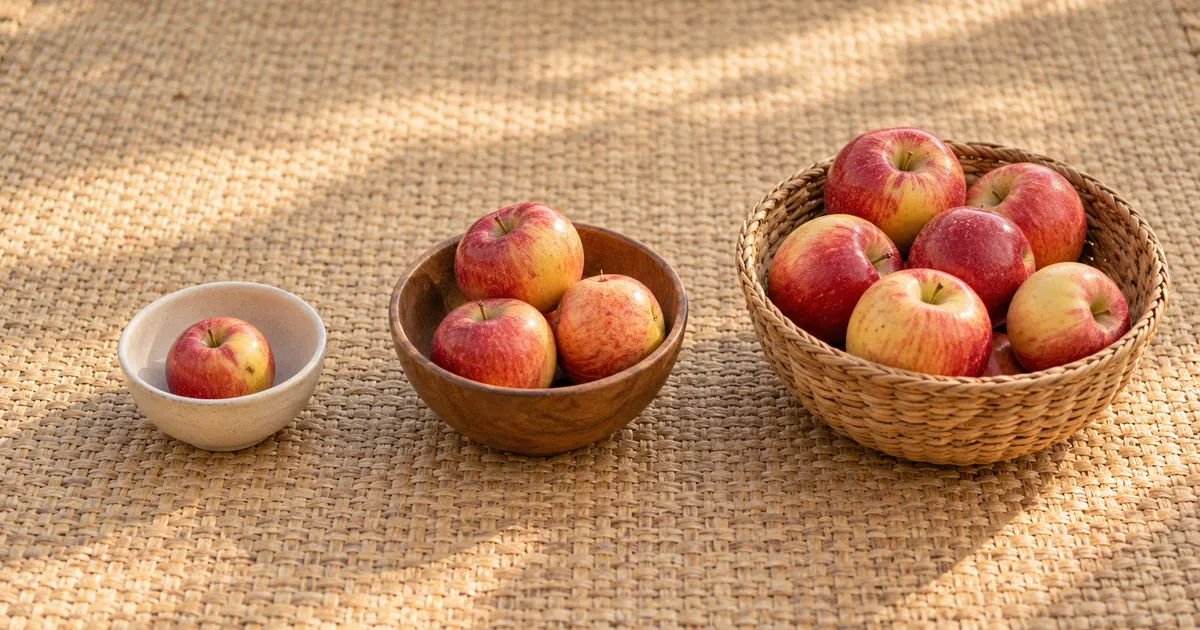
Try a comparison hunt using nearby objects. Choose two books, cups, or cushions and form sentences with “larger,” “lighter,” or “softer.” Add a third object and change the adjective to “largest,” “lightest,” or “softest.”
Improve the Description
Replace the repeated adjective: “We had a good day in a good park with good weather.” Try: “We had a peaceful day in a quiet park with sunny weather.” Discuss the distinct detail each adjective adds.
Let your child describe an object without naming it. Family members guess from clues such as “It is round, smooth, and orange.” Choosing accurate adjectives helps listeners picture the object.
Common Mistakes and Simple Corrections
English adjectives do not usually take a plural ending. Say “two red balls,” not “two reds balls.” They do not change for gender: “a happy boy” and “a happy girl.” Children may need extra practice when another family language follows different rules.
Children may confuse adjectives with adverbs. In “The rabbit is quick,” “quick” describes the rabbit. In “The rabbit runs quickly,” “quickly” describes the action. Linking verbs can take adjectives: “The rabbit looks tired” is correct because “tired” describes the rabbit.
What Is an Adjective? A Practical Guide for Kids helps prevent adjective overload. Multiple adjectives can precede one noun, but crowded phrases weaken writing. Retain details that shape the reader’s picture: “a tiny silver key” is stronger than “a pleasant little small silver key.”
- Try one adjective hunt with your six-year-old using a favorite picture book.
- Practice replacing three vague adjectives with precise choices during tonight’s reading.
- Use color cards to separate adjectives from nouns in five simple sentences.
- Correct word-order mistakes by rebuilding four phrases together with magnetic tiles.
- Praise accurate descriptions, then ask your eight-year-old to explain each adjective’s job.
For the rule wording, Wikipedia — English Grammar is a useful reference while the practice examples here stay adapted for children.
Frequently Asked Questions
How Can I Explain an Adjective to a Young Child?
Say, “An adjective is a describing word.” Contrast a familiar object: “a cup” and “a blue cup.” Ask what information “blue” adds, then practise size, texture, or feeling words. Keep What Is an Adjective? A Practical Guide for Kids nearby, but begin with real objects and short spoken sentences.
What Is the Difference Between an Adjective and a Noun?
A noun names a person, place, animal, thing, or idea. An adjective describes a noun or adds information. In “the brave child,” “child” is the noun and “brave” is the adjective. Because a word can perform different jobs, examine how each word functions in its sentence.
Where Does an Adjective Go in an English Sentence?
An adjective commonly appears before a noun, as in “a tall tree.” It can follow a linking verb, as in “The tree is tall” or “The tree looks healthy.” Natural English favours certain adjective orders, but younger learners should first choose one or two precise details.
When Should Children Learn Comparative Adjectives?
Children can begin after understanding comparisons between visible objects. Start with “small” and “smaller,” then introduce “smallest” when comparing three or more. Teach irregular forms such as “better” and “best” separately. Comparing toys or household objects makes the meaning concrete.
How Do I Know Whether My Child Understands Adjectives?
Ask your child to find an adjective in a new sentence, identify its noun, and use the adjective elsewhere. Recognition can show memory; independent use shows deeper understanding. If your child struggles, return to a concrete object, model one example, and request a small change.
- Start with one clear noun. Ask your child to add a colour, size, texture, or feeling.
- Practice both positions. Compare “a soft blanket” with “The blanket feels soft.”
- Try a comparison. Use two objects for “smaller,” then add a third for “smallest.”
Start your child's English journey today — book a trial lesson with LearnLink.
Stay updated on our latest tips and resources by following us on Instagram LearnLink.